You can stop at any step. Nothing is signed until after your call with Dr. Connor.
A personal invitation.
We have the work: a research backlog, Labora Rounds, our journals, the app, and our audience. Partners are the people who want to help with it. Joining starts with a personal invitation from Dr. Connor, with your own page at cpn.laboracollective.com/invite/.
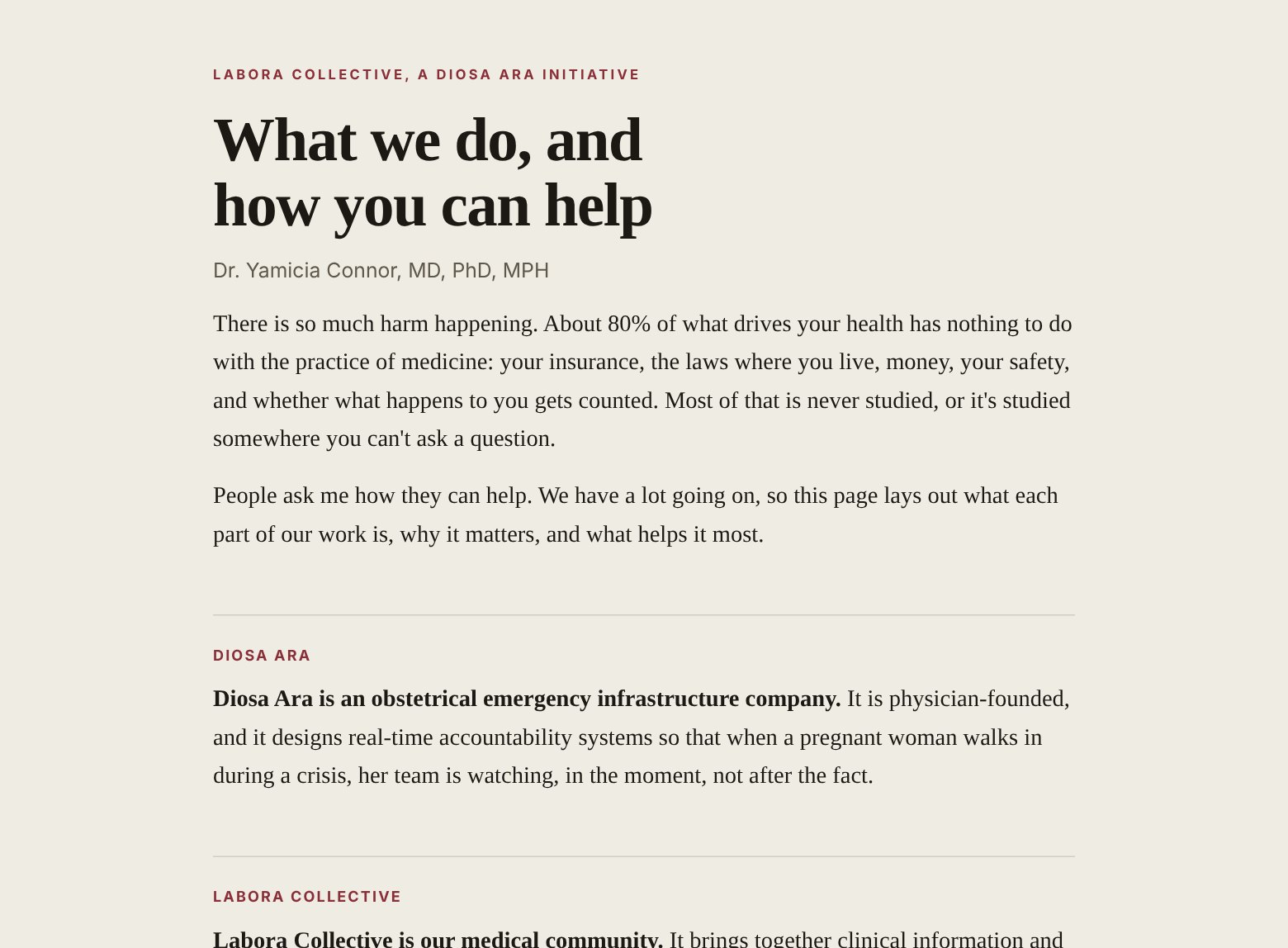
On it you read what we do, create a free Labora Collective account with the email the invitation went to, and write to Dr. Connor.
You write back.
Replies go to laboracollective@diosara.com, with Dr. Connor (yconnor@diosara.com) copied. Ayesha answers within 48 hours.
A call with Dr. Connor.
Ayesha books the call. Nobody gets an agreement before the call. You both leave it knowing whether to go ahead.
The agreement.
If we go ahead, we send you the partner agreement (the MOU). You sign online and confirm by email. Dr. Connor countersigns, and you both get the signed PDF.
Either side can end it at any time with 30 days' notice. Co-authorship of a specific publication is agreed project by project, in a separate written agreement made before the work starts.
Your partner home.
Your partner home opens in your Labora Collective account, with an Insiders membership. Dr. Connor adds you to the partners' group chat, and you can start your own groups.
Your partner page.
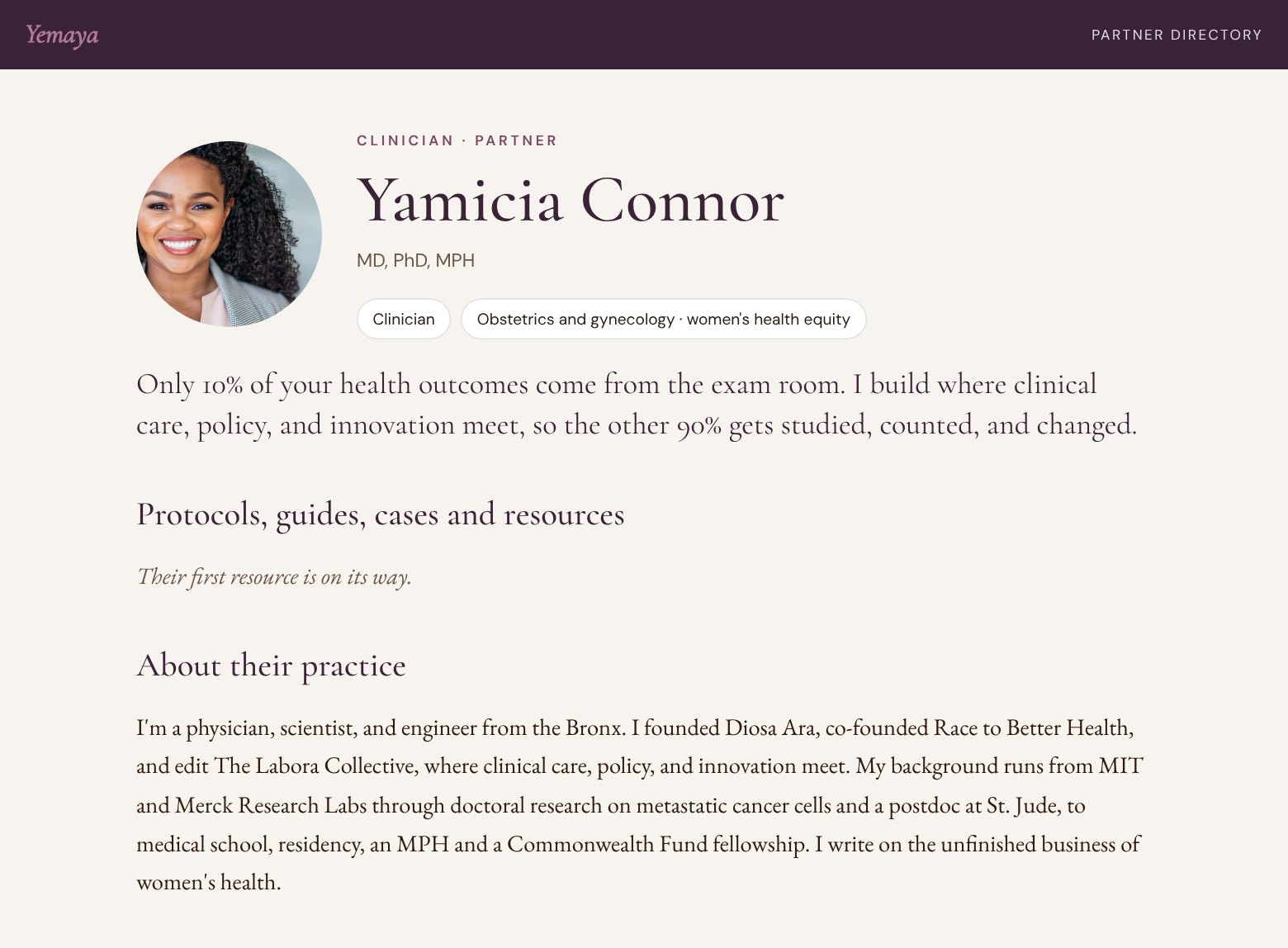
Fill in your profile, choose one of five designs, preview it, and send it to us. We publish it and list you in the partner directory.
Contribute, once a quarter.
The first choice is reviewing our work: check 10 signal cards a month, or review one playbook. Or publish your own piece in our journals, under your name.
We fact-check our own work. We edit partners' pieces for clarity and accuracy, and partners stay responsible for the accuracy of their own work, which is published under their name. Partners get our fact-checking tools.
The quarterly salon.
All partners meet once a quarter. You get the invitation with the date.
A marketplace with a 10% booking commission, and a 60/40 revenue share, through the MSO. Each will have its own agreement.
See it for yourself.
The pages a partner moves through, as they look today.